For planners
For Wedding Planners
Most of this website is written for couples. This page is not.
If you plan weddings for a living and you have arrived here from somewhere, it is probably because you have heard that I co-founded a piece of software. I did, and this is the honest account of why.
The spreadsheet gets you further than you expect, and then it stops
For years I ran weddings the way most planners I know still do. A spreadsheet per wedding, a folder of contracts, a calendar, and a phone full of WhatsApp threads.
It works. That is the thing nobody says. A good planner with a good spreadsheet can run a wedding properly, and plenty do.
Once you are juggling several weddings, there is no longer a single place where everything lives. There are four versions of a guest list. A supplier's arrival time exists in an email you can find in about ninety seconds. A payment date is in your head and nowhere else. Nothing has gone wrong yet, and you are one dropped detail away from something going wrong.
What I could not find
I looked at what was available. Some of it is good, and some of it I would still recommend depending on how you work.
What I could not find was anything that did three things at once.
Built for how we actually work in this country
I wanted the practical details of UK weddings to belong in the same workflow as the guest list, suppliers and running order, rather than in a separate collection of notes.
A price that fits how you work
Different tools price their plans differently. For me, the useful comparison is the current plan, its limits and what it costs for the number of weddings you manage, not a blanket claim about every other product.
A connected plan for the day itself
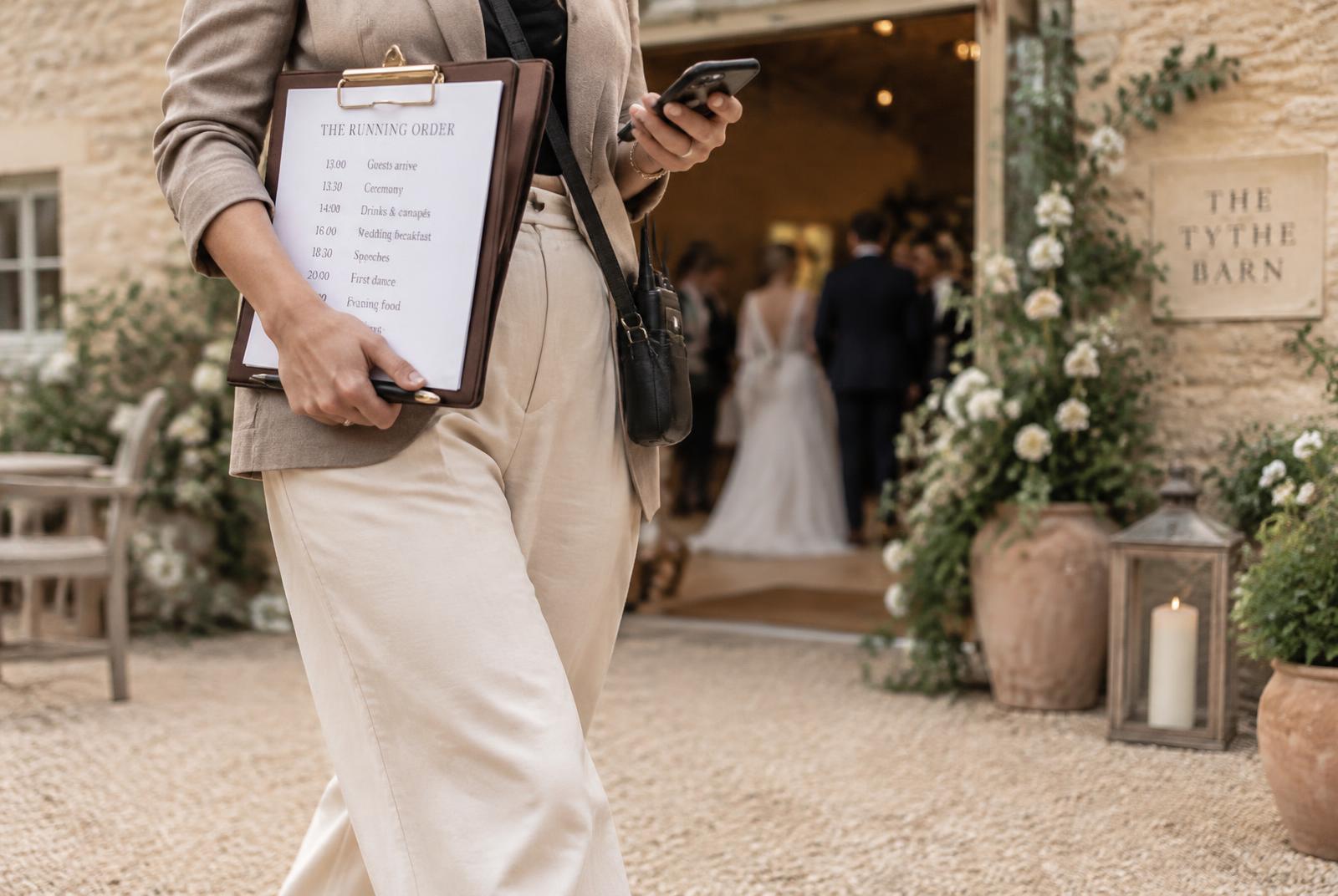
Other tools have timelines and mobile features too. What matters to me is keeping the running order connected to the rest of the planning, so a delay does not mean rebuilding the day from scattered notes while someone asks about the cake.
So we built one
It is called I Said Yes. I co-founded it with Gary Nunn, who has photographed weddings for twenty-four years and spent thirteen before that building systems for large organisations.
The focus is a connected planning workspace and a running order for the day itself. The current product pages explain what is available today.
The day part is the bit I care most about. A useful running order needs to account for delays, supplier handovers and timings that cannot move, such as the registrar or venue curfew. Before relying on any tool at a venue with limited signal, check its current offline support and what needs to be loaded beforehand.
Guests, meal choices, budgets, suppliers and table plans all need to work together. When looking at I Said Yes, check the current features and sharing controls against the way you work with couples and suppliers.
I am not neutral about this
Obviously. I co-founded it, so take everything above accordingly.
What I can tell you is that I use it for my own weddings, in an ordinary workspace, the same as anybody else's. My couples are in it. Their guest lists, their budgets, their running orders. If it did not work I would be the first to find out, in front of a client, on a Saturday.
Workspace privacy matters, particularly because I am a working planner and some of you reading this are my competitors. I Said Yes's privacy policy explains the planner's role, how data is handled and the access involved in providing the service. Read how that works.
If you want to look
Visit I Said Yes for the current trial, plans and features. If you are moving from another tool, check the current migration availability and terms with the team before arranging a transfer.
And if you are not here about software
I also plan and coordinate weddings across Gloucestershire and the Cotswolds. If that is why you are here, get in touch.