Cotswolds Wedding Venues: A Planner's Honest Guide
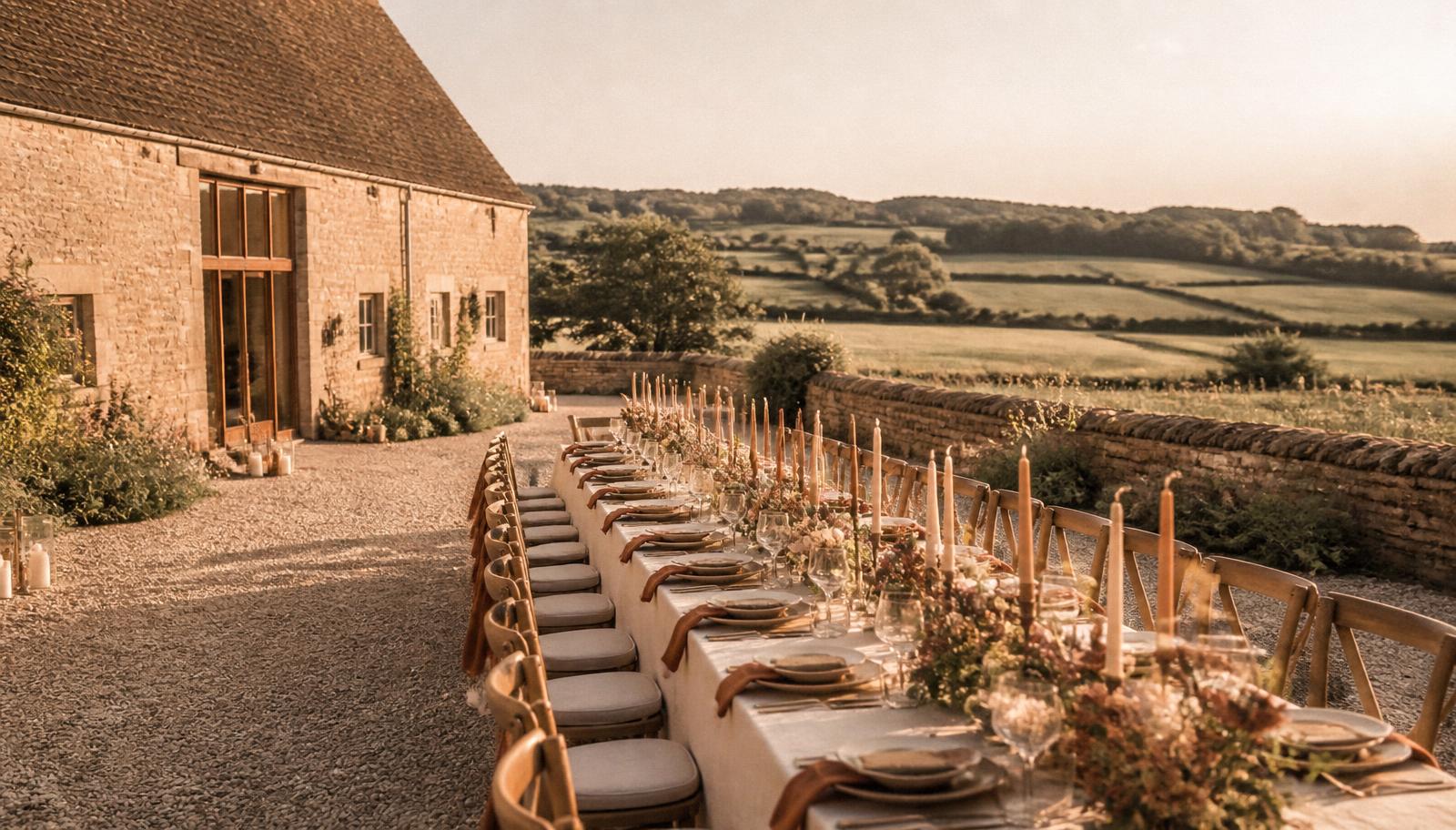
Almost every Cotswolds wedding venue photographs beautifully. Far fewer of them are straightforward to run. This is the guide I wish couples had before they signed, written from the side of the fence that deals with the logistics.
I plan and coordinate weddings across the Cotswolds every season, which means I have stood in a lot of these spaces at seven in the morning with a clipboard, and again at midnight with a bin bag. Venue websites tell you the capacity and the hire fee. They rarely tell you whether the catering tent has to go somewhere unlovely, whether the field turns to soup after two days of rain, or whether the noise limiter cuts the band at half eleven.
So this is a venue guide with the planning reality attached. No rankings, no sponsored placements, and no pretending that a venue is perfect when it simply suits a particular kind of wedding.
First, understand the two types of Cotswolds venue
Nearly every venue in the region falls into one of two camps, and the difference matters more than the aesthetic.
All inclusive venues provide the space plus catering, staff, furniture, bar and usually a venue coordinator. The hire fee looks higher and the total cost is often lower, because you are not paying for a hundred small hires and a logistics brain.
Dry hire venues give you the building or the land and very little else. Barns on working farms, private estates, family fields and some of the most photographed spaces in the Cotswolds sit here. The hire fee looks appealing. Then you add caterers, kitchen tent, generators, loos, furniture, glassware, staff, lighting, waste removal and a plan for who lets the florist in at six in the morning.
Neither is better. But a dry hire venue without a planner is where most Cotswolds weddings go quietly wrong, and it is the single biggest reason couples get in touch with me.
Cotswold barn wedding venues
Barns are what the Cotswolds is famous for, and the good ones genuinely earn it. Honey stone, exposed beams, and the kind of light that makes a photographer relax.
- Cripps Barn, near Bibury: relaxed, atmospheric and made for autumn and winter. Warm stone and open fires. Popular enough that dates go early, so flexibility on day of the week helps.
- Kingscote Barn, Tetbury: hilltop views that do a lot of work for you at golden hour. The site layout means the drinks reception timing needs thought if the wind is up.
- Lapstone Barn, Chipping Campden: sleek, modern and pared back. Suits couples who want an editorial look rather than a rustic one, and it takes styling beautifully.
- Stone Barn, Aldsworth: the classic Cotswold farm setting with an outdoor ceremony option. Weather contingency planning matters here more than most.
- The Great Tythe Barn, Tetbury: large capacity and well practised at bigger guest counts.
Planning note on barns generally: check the noise limiter and the finish time before anything else. A band that has to stop at eleven changes the whole shape of your evening, and it is much easier to design around than to discover in the last month.
Manor houses and castles
If you want the day to feel like an occasion rather than a party, these are the ones.
- Sudeley Castle, Winchcombe: genuinely grand, with gardens that carry the whole day. Access and setup windows are tight, so supplier scheduling has to be exact.
- Owlpen Manor, near Uley: Tudor manor with cottages on site, which makes it a natural fit for a weekend wedding rather than a single day.
- Caswell House, Oxfordshire Cotswolds: a working farm and manor combination, with an on site walled garden that removes a lot of decoration spend.
- Elmore Court, near Gloucester: characterful, design led, and unusually good at letting couples do something that is not a template.
- Manor by the Lake, Cheltenham: closer to town, easier for guest transport, and a good option when half your guest list is travelling.
Private estates and marquee weddings
A field belonging to family, a private estate hired for the weekend, or a marquee on land near the village you grew up in. These produce the most personal weddings I work on, and by a distance the most work.
You are effectively building a temporary venue. Power, water, drainage, ground conditions, parking, catering infrastructure, lighting, guest transport in and out of lanes designed for tractors, and a full weather plan. Budget for the infrastructure honestly at the start and the day itself is a joy. Underestimate it and the money runs out somewhere around the loos.
If a marquee wedding is what you are picturing, my honest advice is to bring in planning support early, at the point of choosing the site rather than after the deposit has gone.
What Cotswolds venues actually cost
Venue hire across the region typically lands somewhere between £5,000 and £20,000 or more, depending on exclusivity, season and guest numbers. All inclusive venues will often quote a per head figure instead, which makes comparison harder than it should be.
A fair way to compare two venues is to price the whole day at each, not the hire fee. Take the hire cost, add catering and drinks for your real guest count, add everything the venue does not provide, then add ten percent for the things nobody remembers until the final month. The venue that looked expensive is frequently the cheaper one.
Peak Saturdays from May to September book eighteen months to two years ahead. Fridays, Sundays and the shoulder months of April and October are noticeably better value and, in my experience, no less lovely.
Five questions to ask on every venue viewing
The answers to those five tell you more about how your day will feel than any set of photographs.
- What time can suppliers access the site, and what time does everything have to be out by?
- Is there a noise limiter, what level is it set to, and what time does music have to end?
- What exactly is included, and what will I be hiring separately?
- Where does catering actually operate from, and is that space visible to guests?
- What is the wet weather plan, and have you run it before?
Choosing well
The right venue is usually obvious within about ten minutes of arriving. Not the grandest one, not the one with the best social media, but the one where you can picture your people relaxed and slightly overserved at nine in the evening.
Once it is booked, the job becomes making the space work. That is where I come in, whether that is full planning from the start, partial planning to tighten up what you have already begun, or on the day coordination so you can spend the day as a guest at your own wedding.
If you'd like support turning your venue ideas into a beautifully planned celebration, discover my Cotswolds wedding planning service.
Frequently asked questions
What are the best wedding venues in the Cotswolds?
Widely loved Cotswolds wedding venues include Cripps Barn, Kingscote Barn, Lapstone Barn, Stone Barn, Caswell House, Owlpen Manor, Sudeley Castle and Elmore Court. The right one depends on guest numbers, season and whether you want an all inclusive or dry hire venue.
How much does a Cotswolds wedding venue cost?
Venue hire in the Cotswolds typically ranges from around £5,000 to £20,000 or more, depending on exclusivity, guest numbers and season. Dry hire venues usually have a lower hire fee but higher total spend once catering, furniture, staffing and infrastructure are added.
What is a dry hire wedding venue?
A dry hire venue provides the space only. You arrange catering, bar, furniture, staffing, lighting, toilets and often power and waste separately. Many of the most beautiful Cotswolds barns and private estates are dry hire, which is why couples marrying at them often work with a planner.
How far in advance should I book a Cotswolds wedding venue?
Peak Saturdays between May and September are usually booked eighteen months to two years ahead. Fridays, Sundays and the April and October shoulder season have better availability and are often better value.
Do I need a wedding planner for a Cotswolds wedding?
Not always. If your venue is all inclusive with a strong in house team, you may only want on the day coordination. If you are marrying at a dry hire barn, a private estate or a marquee site, planning support makes a significant difference because every supplier and timing runs through you otherwise.